

She thought it was just baby teeth.
When Maria brought her seven-year-old daughter, Lucia, to her orthodontic consult in Wellington, she wasn’t expecting any news. Her teeth looked a little crowded, but kids’ teeth always look a little crowded, right?
Wrong.
Their orthodontist spotted something she hadn’t: Luciana’s upper jaw wasn’t growing wide enough to accommodate her incoming permanent teeth. Without early intervention, she’d likely face more complex orthodontic treatment as a teenager. However, a simple palatal expander at age seven could correct the problem during a window that closes as the jaw matures.
“I had no idea we were even watching for that,” Maria said afterward. “I thought we’d just handle braces when the time came.”
If you’re a parent in Wellington, Royal Palm Beach, Lake Worth, or Greenacres, this story might sound familiar. Most families don’t think about orthodontic care until the teenage years, but by then, the easiest window for treatment has often passed.
Here’s what every local parent needs to know.
Why See an Orthodontic Specialist?
Some problems are hard to spot — and that’s exactly why a specialist’s eye matters. Your general dentist does an excellent job monitoring your child’s overall dental health, but orthodontic concerns often require a trained specialist to identify. Here are the signs that are easy to miss at home:
- Crowded, spaced, or impacted teeth
- Difficulty in chewing or biting
- An unbalanced facial appearance
- Jaws that are too far forward or back
- Thumb-sucking or tongue thrusting
- Breathing through the mouth
Orthodontics is its own specialty — that’s all we do. This singular focus means Dr. Young evaluates every patient through a comprehensive lens that a general dental visit simply isn’t designed for.
Why Young Orthodontics?
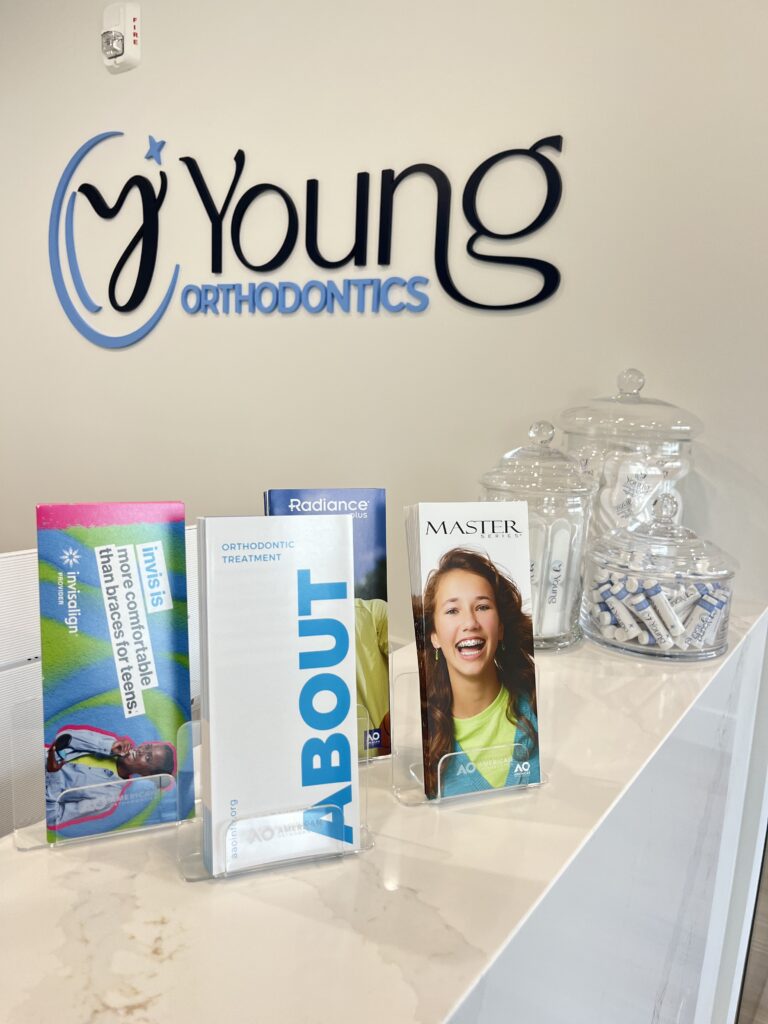
Not all orthodontic practices are the same. Here’s what sets Young Orthodontics apart for families throughout Palm Beach County:
- Single doctor, family focused—you’ll see the same doctor at every visit
- Concierge care in a private practice setting
- No more impressions — digital scanning with iTero for everything
- Flexible schedules that work for your family
- Customized financing options to fit your life
Being seen by an Ivy League-trained orthodontist in a boutique practice isn’t a luxury — at Young Orthodontics, it’s just how we do things.
Why the American Association of Orthodontists Recommends Age 7—Not 12
Most parents assume braces are a rite of passage for teenagers. And while many kids do begin comprehensive treatment around ages 11–14, the American Association of Orthodontists (AAO) officially recommends a child’s first orthodontic evaluation by age 7.
Why seven? By that age, your child has a mix of baby and permanent teeth. This is sufficient for a trained orthodontist to assess the development of the jaw, bite, and emerging teeth as a comprehensive system. Problems that are simple to correct at age 7 or 8 can become significantly more complex (and expensive) if left until the teenage years.
What “Early Treatment” Actually Means
Early orthodontic treatment, sometimes called Phase 1 orthodontics, is not about cosmetics. It’s not about straight teeth for school photos. It’s about guiding jaw development during a window when the jaw is still growing.
Phase 1 treatment may include:
- Palatal expanders to widen a narrow upper jaw
- Space maintainers to preserve room for incoming permanent teeth
- Partial braces to correct severe alignment concerns
- Habit appliances to break finger-sucking patterns affecting jaw shape
Not every child needs Phase 1 treatment. In many cases, early monitoring alone is the right call. But you can’t know which camp your child falls into without an evaluation.
The Cost of Waiting
Research published by the AAO shows that early intervention can reduce the severity of future orthodontic problems, and in some cases, eliminate the need for tooth extractions or jaw surgery later.
6 Signs Your Child May Need an Orthodontic Evaluation Now
You don’t need to be a dentist to notice these warning signs. Many of them show up in everyday life — at the dinner table, in photos, or during bedtime.
1. Crowded, Overlapping, or Twisted Teeth
This is the most visible sign. If permanent teeth are erupting in the wrong position, pushed sideways, or clearly competing for space, the jaw may not be wide enough to accommodate them. Early intervention can create that space naturally, using the jaw’s own growth rather than extracting teeth later.
2. Losing Baby Teeth Too Early or Too Late
Baby teeth act as natural space holders. Losing them too early (from decay or injury) leaves gaps that neighboring teeth drift into, blocking incoming permanent teeth. Losing them too late means permanent teeth may erupt in the wrong position entirely. If your child’s tooth loss pattern seems off, an orthodontic evaluation can determine whether the timing is affecting development.
3. Difficulty Chewing, Biting, or Constant Jaw Discomfort
Children shouldn’t need to work hard to eat. If your child avoids certain foods, frequently complains of jaw pain, or seems to chew only on one side of their mouth, this may indicate a bite problem — such as overbite, underbite, crossbite, or open bite. Left unaddressed, bite misalignments affect digestion, facial development, and long-term joint health.
4. Mouth Breathing During Sleep
This one surprises most parents. Chronic mouth breathing — particularly during sleep — can indicate a narrow palate or airway obstruction that affects how the jaw develops over time. Children who mouth-breathe regularly may develop:
- Longer, narrower facial structure
- Dental crowding from a narrow arch
- Poor sleep quality and daytime fatigue
- A greater susceptibility to cavities (from chronic dry mouth)
If your child consistently sleeps with their mouth open or snores frequently, mentioning this at an orthodontic evaluation is important.
5. Finger Sucking or Pacifier Use Beyond Age 4
Sucking habits are completely normal in infants and toddlers. But habits that extend past age 4 place consistent pressure on the developing palate and front teeth, often pushing upper teeth forward and narrowing the arch. The longer the habit continues, the more pronounced the effects. Early orthodontic evaluation can assess whether structural changes have already begun.
6. Speech Difficulties or a Noticeable Lisp
Orthodontic issues and speech patterns are closely connected. The positions of the tongue, teeth, and jaw all influence how sounds are formed. If your child has a persistent lisp, difficulty pronouncing certain sounds, or you’ve noticed their tongue pushing against or between the teeth when speaking, an orthodontic evaluation (alongside speech therapy if needed) can identify underlying habits.
The Emotional Side of Early Orthodontic Care Nobody Talks About
Clinical outcomes matter. But so does your child’s confidence.
Research has found that children with visible dental differences are more likely to experience social anxiety, avoid smiling in social settings, and face peer teasing related to their appearance. These aren’t minor issues—they shape how children see themselves during some of the most formative years of their lives.
Confidence Is Part of the Treatment
At Young Orthodontics in Wellington, Florida, we understand that behind every clinical concern is a child who wants to smile freely in school photos, at birthday parties, and on the soccer field. Early treatment isn’t just about preventing future complexity. It’s about giving children the foundation for a confident, healthy smile during the years when it matters most socially and emotionally.
What to Expect at Your Child’s First Orthodontic Visit in Wellington
Many parents put off scheduling a consultation simply because they don’t know what to expect. Here’s exactly how an early evaluation works at Young Orthodontics.
The Evaluation Is Free — and Low-Pressure
Your child’s first visit is a free consultation with no obligation and no pressure. It is not a sales appointment. It’s a clinical conversation to understand where your child’s development stands.
What We Look For
Dr. Kim Young evaluates:
- Jaw width and growth patterns
- Bite relationship (how upper and lower teeth meet)
- Spacing and crowding
- Tooth eruption sequence
- Any functional concerns (breathing, chewing, speech)
The Three Possible Outcomes
After an evaluation, families typically hear one of three things:
- Everything looks great — no concerns; come back in 6 months for monitoring
- Let’s watch this — a specific area to track with periodic check-ins
- Early treatment would benefit your child now, with a specific recommendation and timeline
No matter the outcome, you’ll leave with clarity and a plan.
Why Wellington Families Choose Young Orthodontics for Early Treatment
Dr. Kim Young brings her Ivy League training — a Bachelor’s degree from Cornell and a Doctor of Dental Medicine from the University of Pennsylvania — to every patient she sees in the office. That level of clinical expertise, combined with genuinely compassionate care, is what sets Young Orthodontics apart in Palm Beach County.
A Boutique Practice That Treats Your Child Like Family
Unlike large multi-location orthodontic chains, Young Orthodontics is a single-location boutique practice. Dr. Young personally oversees every treatment plan and every appointment. You’ll always see the same doctor — not a rotating associate. This only means continuity, trust, and a doctor who actually knows your child’s case.
Advanced Technology, Zero Discomfort
Our iTero digital scanner eliminates the gooey impressions that make children (and adults) anxious. Digital imaging means faster, more precise treatment planning and a more comfortable experience from the very first visit.
Flexible, Family-Friendly Financing
We believe every Wellington family deserves access to exceptional orthodontic care. That’s why we offer:
- Discounts for military families, teachers, and first responders
- 0% financing options
- All insurances accepted
- Flexible payment plans to fit any budget
Frequently Asked Questions About Early Orthodontic Treatment
Q: My child’s teeth look fine. Do we still need an evaluation by age 7?
Yes, this is one of the most common misconceptions we address. Many orthodontic issues are not visible to the naked eye. An evaluation gives you a complete picture that a visual inspection at home simply cannot.
Q: Isn’t Phase 1 treatment just a way for orthodontists to charge twice?
This is a fair concern and an important one to address honestly. Not every child needs Phase 1 treatment. At Young Orthodontics, we only recommend early intervention when clinical evidence shows it will meaningfully reduce future complexity or prevent a problem that cannot be addressed as effectively later. We will never recommend treatment your child doesn’t need.
Q: How long does Phase 1 orthodontic treatment take?
Phase 1 treatment typically lasts around 12 months, depending on the concern being addressed. After Phase 1, most children enter a resting phase before Phase 2 (comprehensive braces or Invisalign) treatment in adolescence.
Q: Does early orthodontic treatment mean my child won’t need braces later?
Early treatment reduces severity and complexity, but it does not always eliminate the need for Phase 2 treatment. Think of Phase 1 as laying the foundation. Phase 2 completes the final alignment. The difference is that with a strong foundation in place, Phase 2 is typically shorter, simpler, and more predictable.
Take the First Step — Schedule Your Child’s Free Consultation
If anything in this article sounded familiar — crowding, bite concerns, mouth breathing, delayed tooth loss, or thumb sucking — then your child deserves an evaluation.
It’s free. It’s fast. And it could make a significant difference in their development, their confidence, and their long-term oral health.
Young Orthodontics is proudly serving families throughout Wellington, Royal Palm Beach, Lake Worth, Greenacres, and all of Palm Beach County.